
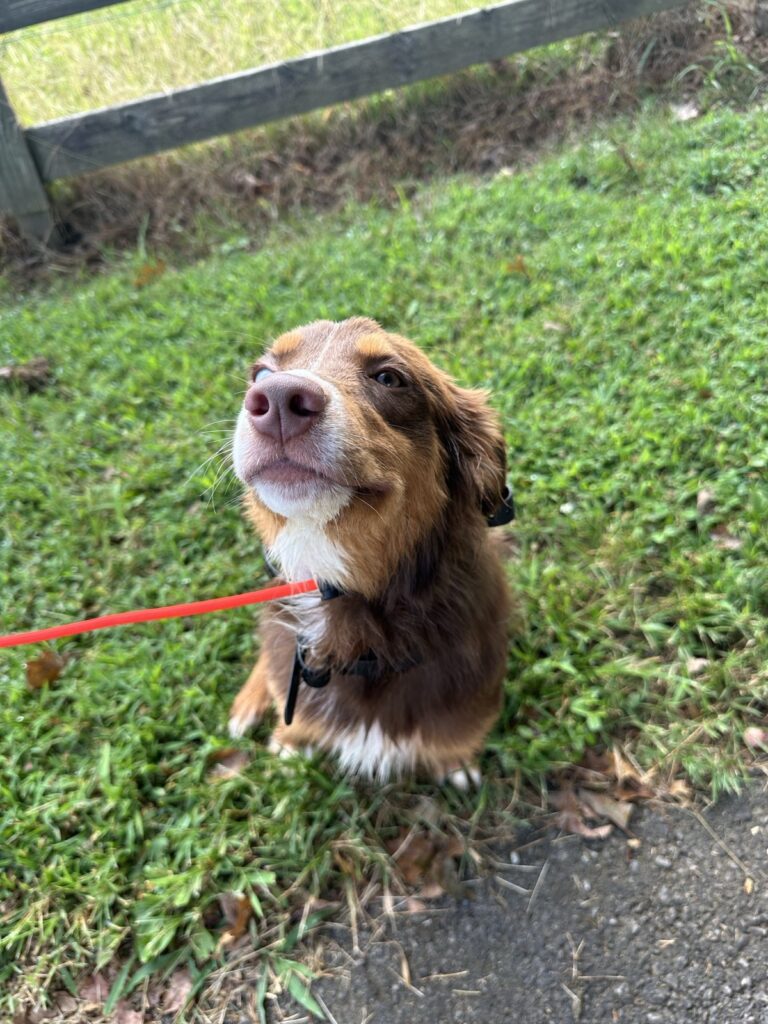

Your puppy is not trying to destroy your house
One day your puppy is a sweet little ball of fluff. A few weeks later they are gnawing on table legs, grabbing pant cuffs and treating your fingers like a chew toy. If you have found a tiny tooth on the rug or a spot of blood on a toy, you are right in the middle of it: your puppy is teething.
I’m Lindsey Hill, co-founder and head trainer at Off Leash K9 Training of North Alabama. I have raised puppies in a busy house with three kids and a Labrador, a Doberman and a German Shepherd, so I know how long the teething months can feel. The good news is that teething is temporary, and what you do during it shapes the chewing habits your dog keeps for life. Here is what to expect, what is normal, and how to get through it with your shoes intact.
The puppy teething timeline
Every puppy is a little different, and breed plays a role, but the general pattern looks like this:
- Around 3 to 6 weeks: the baby teeth come in. Your puppy was probably still with their litter for this part.
- Around 3 to 4 months: the baby teeth start falling out as the adult teeth push through. This is when most owners notice teething for the first time, and when chewing ramps up.
- Around 4 to 6 months: the big adult teeth, including the molars, come in. Many puppies chew hardest in this window.
- Around 6 to 7 months: most puppies have their full set of adult teeth, and the sore-gum chewing starts to ease.
Those ages are approximate, so check with your veterinarian if your puppy seems far off this schedule. Do not be surprised if chewing continues past seven months, either. Young dogs often go through an adolescent chewing phase that has more to do with energy and curiosity than with sore gums.
Normal signs of teething, and when to call the vet
Normal teething can look like:
- Chewing on everything, especially cool, hard or textured surfaces
- More mouthing and nipping at hands and clothes
- A little extra drool, or small spots of blood on toys
- Finding tiny baby teeth on the floor (many puppies swallow them, which is usually harmless)
- Being a bit fussier or more restless than usual
Call your veterinarian if you see a baby tooth that has not fallen out even though the adult tooth is already in beside it, swelling in the face, a refusal to eat, a bad smell from the mouth, or a broken tooth. Those are worth a professional look, and your vet will check your puppy’s bite during routine visits anyway.
Safe ways to soothe your teething puppy
Sore gums are the root of a lot of teething chewing, so relief goes a long way.
- Cold helps. A damp washcloth, twisted and frozen, makes a great teething toy. So does a rubber toy soaked in water and frozen. Always supervise these so your puppy does not chew pieces off.
- Offer a variety of textures. Some puppies want soft rubber, some want rope, some want something firmer. Keep two or three different options in rotation so they stay interesting.
- Size the toy for the dog. A chew should be big enough that your puppy cannot swallow it, and not so hard it could crack a tooth. If you cannot press a fingernail into it at all, it is probably too hard for a puppy.
- Stuffed food toys. Filling a rubber toy with part of your puppy’s meal turns chewing into a job and buys you a calm stretch of time.
Skip anything you are not sure about, and avoid giving your puppy old shoes or socks as toys. They cannot tell an old sneaker from your new ones.
How to redirect teething chewing to the right things
Teething is the perfect time to teach your puppy what is okay to chew, because they are motivated to chew all day long. A simple routine:
Puppy-proof the space. Pick up shoes, cables, kids’ toys and anything you would hate to lose. Use baby gates and a crate so your puppy is not roaming the house unsupervised. A puppy who never gets the chance to chew the couch never builds the habit.
Swap, do not scold. When your puppy grabs something they should not have, calmly trade it for one of their own toys and praise them when they take it. If they bring you something forbidden, thank them for it. You want a puppy who brings things to you, not one who runs and hides with them.
Reward the right choice. When you see your puppy chewing their own toy, quietly tell them they are doing great. If you are using a clicker or marker word, this is a perfect behavior to mark. Our guide to clicker puppy training shows how to set that up.
Protect sleep. Tired puppies chew and bite more, not less. Most young puppies need a lot of rest, so build naps into the day, especially after play and training.
Common teething mistakes to avoid
Most teething trouble comes from very reasonable choices that happen to teach the wrong lesson. Watch out for these:
- Giving too much freedom too soon. A teething puppy loose in the house is a puppy practicing on your furniture. Earn freedom one room at a time as the good habits show up.
- Chasing your puppy to get something back. It feels urgent, but to your puppy it is the best game ever. Next time they will grab the same thing just to start it again. Trade instead.
- Too many toys on the floor at once. A pile of twenty toys makes every object in the house look like fair game. Keep a few out and rotate the rest so each one feels new.
- Rough hand games. Wrestling with bare hands is fun for a few weeks and then painful for months. Put a toy between your hands and your puppy’s teeth every time.
- Expecting the chewing to just stop. Teething ends, but the habits built during it stay. A puppy who learned to chew the couch at four months will often still do it at a year.
A sample day with a teething puppy
Here is a simple rhythm many families find easy to follow:
- Wake up: straight outside for a potty break, then breakfast served in a stuffed rubber toy.
- Mid-morning: a short walk or yard play, a few minutes of marker training, then a nap in the crate with a frozen washcloth or chew.
- Afternoon: another play and potty session, then quiet time in a puppy pen with two or three toys.
- Evening: family time on a leash or behind a gate, with chews handy for the inevitable witching hour, then bed.
You do not need to follow it to the minute. What matters is that your puppy gets plenty of rest, has the right things to chew within reach, and is never left loose and bored long enough to find the wrong ones.
Teething, nipping and little hands
Teething and biting go hand in hand, which is hard on kids. Teach children to offer the puppy a long toy instead of their hands, and to stand still and fold their arms if the puppy gets nippy. An adult should step in and give the puppy a break. If the nipping feels like more than teething, our post on how to stop puppy biting walks through a full plan, and our guide to why dogs chew helps if the chewing carries on past the teething months.
Use the teething months to build a great dog
The teething months line up with one of the most important learning windows of your puppy’s life. The habits your puppy builds now, around chewing, mouthing, crate time and manners, are the habits you will live with for years. That is why we start puppies as early as eight weeks old.
Our AKC S.T.A.R. Puppy package and Basic Marker Mastery program are both reward-based starting points, and the 2-Week Puppy Board and Train lets a trainer lay the foundation for you. You can read how one young dog did with us in Gilda’s story.
Have questions about your puppy? Call us at (256) 998-8316. We work with families throughout Huntsville, Madison, Harvest, Decatur, Athens and the rest of North Alabama.